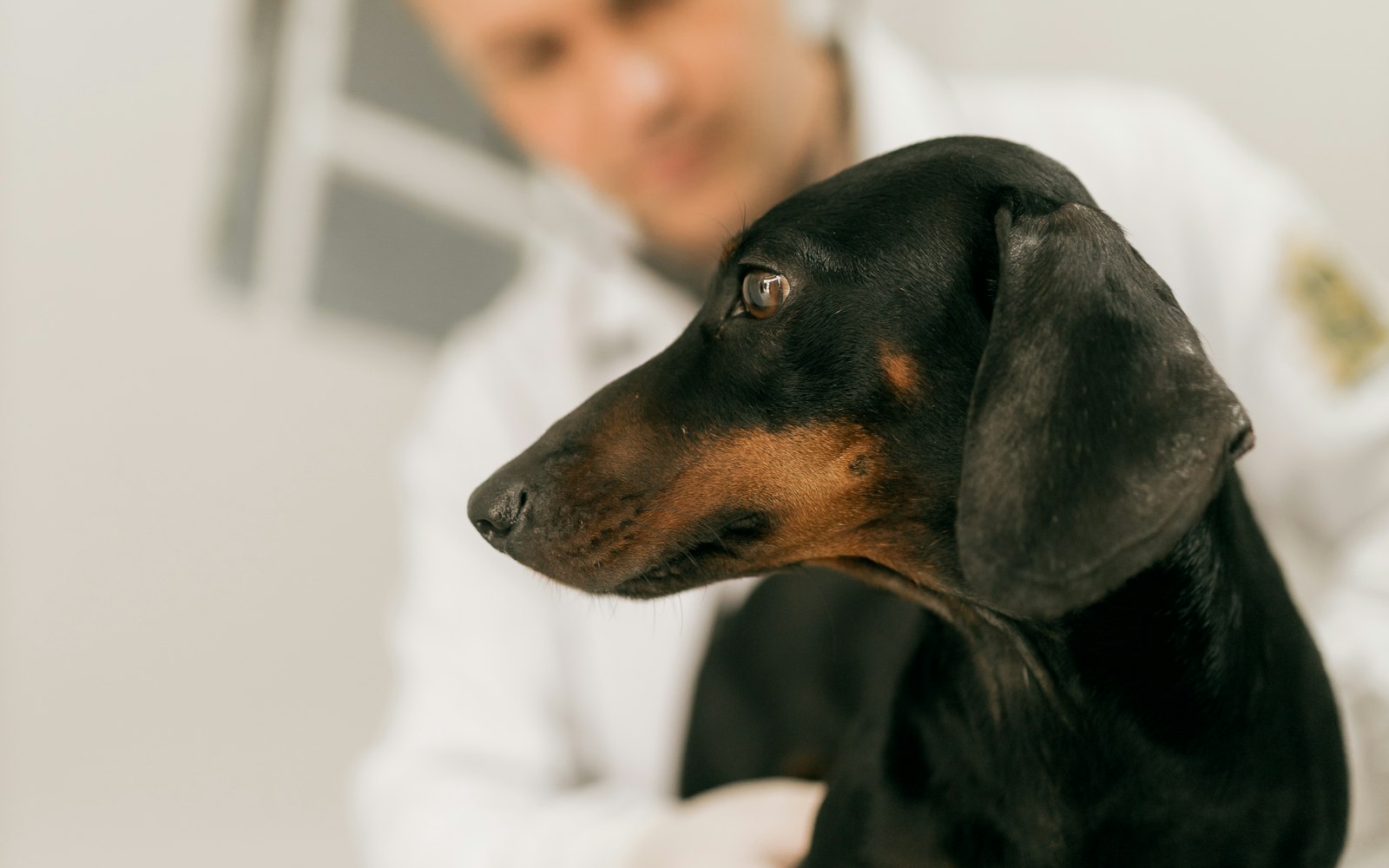
Removing a lump from a dog costs $250 to $700 for a simple fatty tumor and $1,000 to $1,800 for a complex one, according to CareCredit's lipoma guide, and clinic price lists run from about $250 to $1,800 depending on size, location on the body and the surgeon. Those figures are for the surgery, not the work-up that comes with it.
The wide spread comes from the fact that "lump" covers everything from a small skin growth to a large mass that needs deeper surgery. This guide covers prices only. Your vet decides what the lump is and whether it should be removed, and the sections below show how clinics price the operation so you can read your estimate with confidence.
CareCredit's lipoma removal ranges
| Type of fatty tumor | Price range |
|---|---|
| Simple lipoma | $250–$700 |
| Infiltrative lipoma | $1,000–$1,800 |
What the price usually includes
- The surgery and anesthesia (at Access Veterinary Care, that is all the quote covers)
- At some nonprofits: IV catheter, fluids, medication and a follow-up exam
- Usually separate: diagnostics, pre-anesthetic bloodwork, lab testing of the tissue, rechecks
What changes the price
Size and depth do most of the work. CareCredit separates a simple lipoma at $250 to $700 from an infiltrative lipoma at $1,000 to $1,800. The infiltrative kind grows into muscle or connective tissue, and CareCredit describes the removal as more aggressive. The more tissue a surgeon has to work through, the more time on the table and the higher the bill.
The clinic's way of grouping lumps shapes the quote. Anicira in Harrisonburg uses three levels: $429, $825 and $1,392. Peninsula SPCA prices up to 6 inches in a single band of $250 to $700 and quotes bigger growths by estimate only. Access Veterinary Care lists a $500 to $1,600 band for masses. These are different scales, so a "level 2" at one clinic is not the same as a "mid-size mass" at another.
Your dog's weight changes the price at some clinics. Anicira charges $116 more for a dog between 51 and 75 pounds, $154 for 76 to 100 pounds and $215 for dogs over 100 pounds. Larger dogs need more anesthetic and more care, which is the reason for the surcharge.
Where the lump sits matters too, since a lump on a limb or near an eyelid is harder to close than one on the back. The vet decides what the lump is and how it should be handled. For your budget, the lesson is simple: a flat per-lump price is rare, and most estimates give a range that depends on what is found.
What clinics post for mass removal
| Clinic | Price | Notes |
|---|---|---|
| Peninsula SPCA, Newport News, VA | $250–$700 | Growths up to 6 inches; larger ones by estimate only |
| Anicira, Harrisonburg, VA | Level 1 $429, Level 2 $825, Level 3 $1,392 | Over 50 lb adds $116, $154 or $215 |
| Shore Pet Surgery, Grasonville, MD | $350–$1,800 growth removal | Mass consult needed for an accurate price |
| Access Veterinary Care, Minneapolis, MN | $500–$1,600 for masses | $250 deposit; quote covers procedure and anesthesia only |
Weight surcharges at one nonprofit clinic (Harrisonburg, VA)
| Dog weight | Extra fee |
|---|---|
| 51–75 lb | $116 |
| 76–100 lb | $154 |
| Over 101 lb | $215 |
What the quote covers, and what gets added
CareCredit says its lipoma ranges do not include diagnostic tests. That one sentence explains why many owners are surprised. Needle sampling, imaging and lab work to identify the lump are billed before the surgery, and they do not appear in the removal price.
The Minneapolis clinic is blunt about it: its quotes cover the procedure and anesthesia only, and exclude office visit fees, medications, diagnostics and add-on procedures. A $250 deposit is taken for masses. At Anicira in Harrisonburg, the soft-tissue price covers the pre-anesthetic exam, an individualized anesthetic plan, monitoring, an IV catheter and fluids, medications, an e-collar if needed and a follow-up exam, but pre-anesthetic bloodwork at $130 is a separate line where required.
Lab testing of the removed tissue is another common item. One nonprofit clinic lists a $149 histopathology fee next to its exploratory surgery price, which shows the kind of fee that can ride along with an operation. For a lump, ask whether the tissue goes to a lab, what that costs and who calls you with the results.
CareCredit also warns that a fee for an in-office visit can be added to the procedure price. Count the exam before surgery and the recheck after, not just the operation itself.
What real price lists show
The posted prices are a useful reality check, because they show how wide the market is. Peninsula SPCA's $250 to $700 for growths up to 6 inches matches CareCredit's simple lipoma range almost exactly, and that is a good sign that the two sources describe the same kind of job.
At the other end, Shore Pet Surgery in Maryland lists growth removal at $350 to $1,800, and says a mass consult is needed for an accurate price. That tells you how it works at many clinics: the surgeon looks at the lump before putting a number on it. Access Veterinary Care's $500 to $1,600 sits in the same neighborhood.
Anicira's three levels run from $429 to $1,392, and the clinic adds a $825 complex surgery fee that may apply when a procedure takes much longer than expected. That fee is a good reminder to ask about the ceiling, not just the starting price.
I did not find a university teaching hospital that posts a mass removal price online. The clinics that do post prices are nonprofit and low-cost practices, so a national average built from their numbers would skew low. Treat the lists as markers for the bottom and middle of the market, and expect a specialty surgeon in a large city to quote above them.
How to read the estimate line by line
Begin with the line that names the lump and its size. Some clinics price by inches, others by level. Ask how the clinic measures, and ask whether a second lump found during surgery changes the price. Multiple lumps are a common source of a bigger bill, and CareCredit notes that dogs can have several lipomas at once, though it does not price multiple removals.
Next look at anesthesia and monitoring. These may be inside the procedure price or listed on their own. Then find the pre-anesthetic bloodwork line. Anicira lists $130 and says recent bloodwork may be accepted, which is worth asking about.
Look for the lab line. If the lump is sent for testing, that is a fee, and it may be billed by an outside lab. Ask for the price and who handles the report. Then check take-home medication, the e-collar and the recheck.
Finally, ask what the high end of the estimate assumes. Many estimates assume the lump is a certain size and depth. If the surgeon finds something different, the final price can change. The vet decides how much needs to come out, so ask for a written range and a rule for approving anything beyond it.
Costs after the removal
Most owners think the cost ends at the operation, but a few small items follow. A recheck and suture removal may be included or billed per visit. Anicira lists a follow-up exam as part of its soft-tissue care if necessary, while Access Veterinary Care excludes visits and medications from its quote.
Medications are the second item: pain relief and sometimes an antibiotic. I did not find a clinic-posted price for take-home pain medication on a lump removal, so I am not quoting one. Ask for the price and whether you can fill the prescription at a regular pharmacy.
The third item is the lab report and any next steps. If the tissue test shows something that needs more care, that is a separate conversation, and the vet leads it. For budgeting, ask the clinic what the lab fee is and whether a consult to discuss results is billed.
Keep your paperwork. If your dog grows another lump later, a previous invoice makes the next estimate easier to compare, and it shows the clinic what you paid for the last procedure. It also helps you check whether a new quote is built on the same level, the same size band and the same inclusions as the last one. A line that was bundled last time and is billed separately this time is the sort of change that is easy to miss, and a saved invoice lets you ask about it. If you move to a different clinic, bring the old paperwork so the new team can see what was done and what it cost.
When there is more than one lump
Dogs, especially older ones, can have several lumps at once, and clinics handle that in different ways. Some price each lump separately. Others quote a package or a "mass removal" price that assumes one lump and add a fee for each additional one. A few ask you to schedule the extra lumps as a second procedure.
The pricing logic is simple. Anesthesia, monitoring and the surgical team are the largest fixed costs, and once the dog is under, a second lump adds less than a whole new operation would. That is a common reason clinics will discount additional removals in the same session, but no source I opened publishes a discount, so ask your clinic what it charges.
Plan for the combination on the bill: one anesthesia charge, one pre-anesthetic workup, and a separate surgical fee for each lump or a level based on the total work. If the estimate assumes one lump and your dog has three, ask for a revised number before the day of surgery.
Peninsula SPCA's page says growths over 6 inches are quoted by estimate only and may be declined. That shows that even a low-cost clinic has limits, and a very large mass may need a hospital with more surgical resources. The vet decides which setting is right, and your part is to ask each setting for the same itemized estimate.
Sample estimate
Sample estimate: one mid-size mass on a 60 lb Lab at Anicira-style prices
- Mass removal, Level 2
- $825
- Weight surcharge, 51 to 75 lb
- $116
- Pre-anesthetic bloodwork
- $130
- Total
- $1,071
Built from one nonprofit clinic's posted prices. Lab testing of the tissue and any complex surgery fee are not included. It is an illustration, not a quote.
How to pay less
- Ask whether recent bloodwork can be reused so you do not pay for a repeat.
- Get the estimate as a range with an approval limit, so a larger lump does not change the price without your say.
- Ask if extra lumps removed in the same visit are priced at a discount, and in writing.
- Ask whether lab testing is included, and what the outside lab bills.
- Compare clinics using the same lump size and the same inclusions, not just the starting price.
Questions owners ask
How much does it cost to remove a lump from a dog?
CareCredit lists simple lipoma removal at $250 to $700 and infiltrative lipoma removal at $1,000 to $1,800, not counting diagnostics. Clinic price lists run from about $250 to $1,800 depending on size and level.
Are tests included in the removal price?
Usually not. CareCredit says its lipoma figures do not include diagnostic tests, and the Minneapolis clinic's quotes exclude diagnostics. Lab testing of the tissue is a separate fee at most clinics.
Why do some clinics charge by level?
Levels group lumps by size and difficulty. Anicira in Harrisonburg, Virginia lists $429, $825 and $1,392 for levels one to three. Ask what defines each level.
Does my dog's weight change the price?
At some clinics it does. Anicira adds $116 for dogs 51 to 75 pounds, $154 for 76 to 100 pounds and $215 for dogs over 100 pounds.
Is there a lower-cost option?
Nonprofit clinics sometimes post lower prices. Peninsula SPCA in Newport News, Virginia lists $250 to $700 for growths up to 6 inches. Larger growths are quoted by estimate only.
Who decides whether a lump should come off?
Your vet decides what the lump is and whether removal is needed. This page only covers what clinics charge for the surgery and the bills around it.
Sources
- Lipoma Removal Cost, CareCredit (article dated June 13, 2025; figures cite Vety), checked November 23, 2026Used for: simple and infiltrative lipoma ranges and what they exclude
- Services and Prices, Peninsula SPCA, Newport News, VA (pricing as of Oct. 26, 2026), checked November 23, 2026Used for: growth removal price and size limit
- Affordable Pet Surgery, Anicira, Harrisonburg, VA, checked November 23, 2026Used for: mass removal levels, weight surcharges, bloodwork and complex surgery fee, inclusions
- Pricing, Shore Pet Surgery, Grasonville, MD, checked November 23, 2026Used for: growth removal price range
- Surgery Services and Pricing, Access Veterinary Care, Minneapolis, MN, checked November 23, 2026Used for: mass removal range, deposit and what quotes exclude
We only print a figure we can trace to a page listed here. No clinic, kennel or insurer pays us. How we check prices.