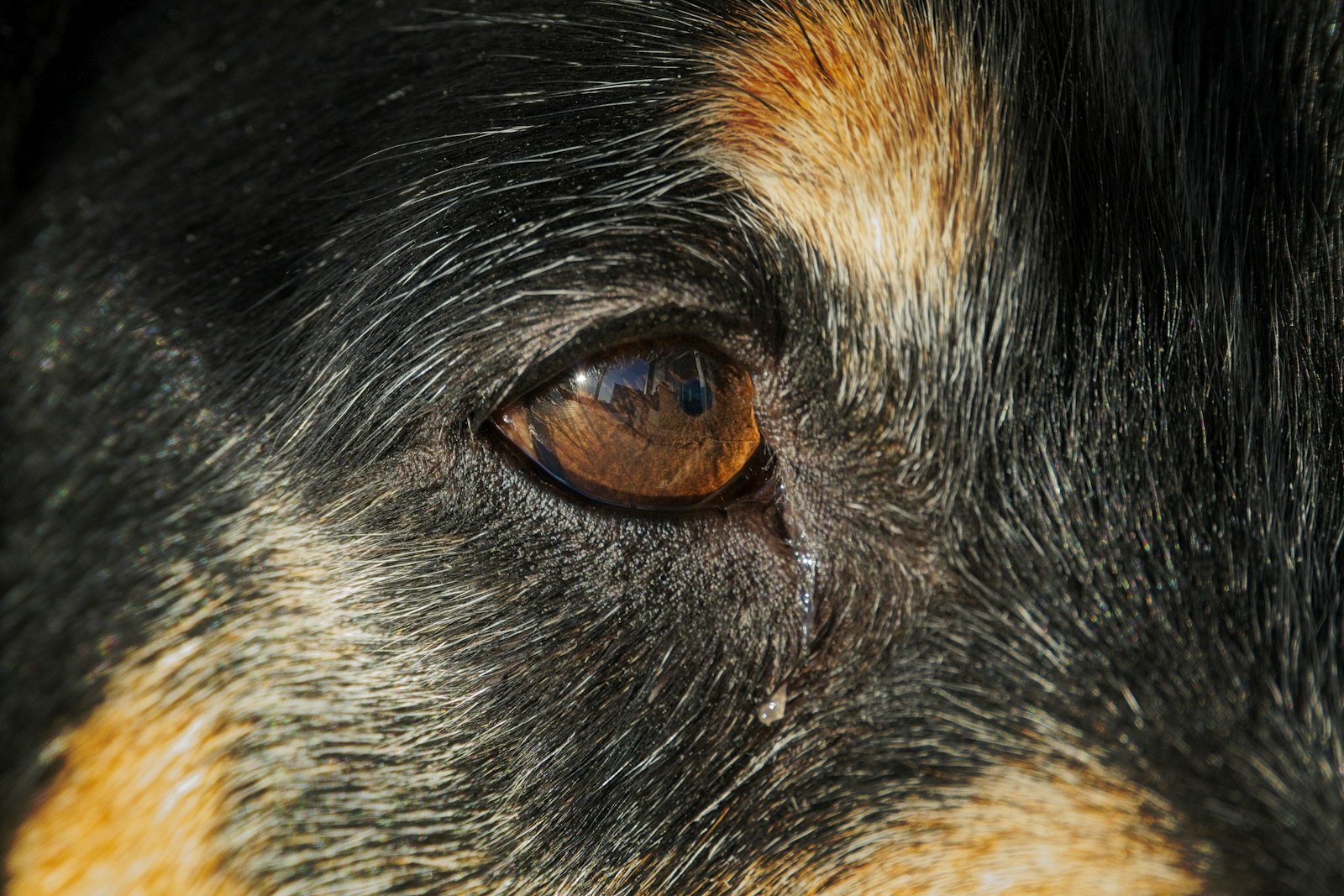
Cataract surgery for a dog costs about $3,782 per eye on average in the United States, and the range runs from $2,995 to $6,845 by location and case, based on CareCredit's 2025 cost study. Both eyes means roughly double the surgery price, plus whatever the clinic adds for aftercare.
The number varies because this is specialist work, usually done at an eye practice or referral hospital rather than a regular vet clinic. This guide covers prices only. Your vet or a veterinary eye specialist decides whether surgery fits your dog, and everything below helps you read the bill, not the diagnosis.
Average cost per eye by state (CareCredit, 2025)
| State | Average per eye |
|---|---|
| Mississippi (lowest) | $3,034 |
| Texas | $3,366 |
| Ohio | $3,426 |
| Florida | $3,725 |
| New York | $4,468 |
| California | $5,055 |
| Hawaii (highest) | $6,758 |
What the price usually includes
- Presurgical testing: blood work, urinalysis, ocular ultrasound and retinal function testing
- General anesthesia and the lens removal itself
- Follow-up visits (confirm how many your clinic includes)
What changes the price
Geography does the most work. CareCredit's per-eye averages start at $3,034 in Mississippi and reach $6,758 in Hawaii. In between you will see Ohio at $3,426, Florida at $3,725, New York at $4,468 and California at $5,055. If you live in a high-cost metro, expect to land in the upper half of the national range.
Complexity is the second driver. CareCredit says price varies with the complexity of the surgery and other factors, and it quotes a success rate of about 80% to 90% for dogs who are good surgical candidates. That second figure is not a price, but it explains why clinics screen carefully. The screening, not the operation, is often where the first few hundred dollars go.
One eye versus both eyes matters. PetMD notes that cost depends on how severe the condition is and whether one or both eyes are operated. The CareCredit figures are per eye, so a dog who needs both sides is looking at roughly twice the surgery fee before add-ons.
The clinic itself also sets the number. A veterinary eye practice has surgical microscopes and a phacoemulsification machine, which is a large equipment cost spread over fewer cases than a regular spay. The vet decides whether your dog is a candidate, so treat the price range as background, not as a reason to skip or rush the evaluation.
How two published sources compare
| Source | Published figure | Notes |
|---|---|---|
| CareCredit (2025 study) | $3,782 average, $2,995–$6,845 range | Per eye; office visit fees may be extra |
| PetMD (Nov. 30, 2024) | $2,700–$4,000 | Depends on severity and one eye versus both |
What a cataract surgery bill is built from
| Bill part | What it covers | Priced in these sources? |
|---|---|---|
| Presurgical testing | Blood work, urinalysis, ocular ultrasound, retinal function testing | No separate prices |
| Anesthesia | General anesthesia for the operation | No separate price |
| The operation | Lens broken up and removed, artificial lens placed | Included in the per-eye average |
| Aftercare | Eye drops about four times a day for several weeks, follow-up visits | Medications not priced |
What the quote covers, and what gets added
CareCredit describes the procedure in four parts, and each part can show up as its own line on an estimate. Presurgical testing comes first: blood work, urinalysis, an ocular ultrasound and a retinal function test. These tests tell the surgeon whether the eye can work after the lens comes out.
Next is general anesthesia, then the operation itself. The surgeon uses a technique called phacoemulsification to break up the clouded lens, remove it and place an artificial lens. The page does not break its per-eye average into dollars for each step, so I cannot give you a testing price or an anesthesia price. Ask your clinic to show them.
Aftercare is where many owners get surprised. CareCredit says topical eye medications are usually given four times a day for several weeks, and recovery takes about four weeks. Follow-up visits are part of that time. Whether those visits and the eye drops are in the surgery price or billed separately depends on the clinic.
CareCredit also warns that fees such as an in-office visit may be charged in addition to the procedure cost. A consult with the eye specialist, rechecks and prescription refills are the usual candidates. Ask for the estimate in writing and check each of those lines.
Why published prices disagree
Two respected sources give different answers. CareCredit's 2025 average is $3,782 per eye with a range up to $6,845. PetMD, in a page published November 30, 2024, says the cost runs $2,700 to $4,000. Both can be true, because they describe different slices of the market.
CareCredit's range goes higher because it covers the full spread of locations and cases it surveyed, including Hawaii's $6,758 state average. PetMD's figure reads like the middle of the market. Neither source says what is inside the number, and PetMD's page lists no inclusions at all. That is the main reason I would not budget from either figure alone.
A practical way to use both: treat $2,700 as a low-end marker and $3,782 as the national average, then adjust upward for your state using the table above. A dog in Ohio is looking at about $3,426 for one eye on CareCredit's numbers. A dog in California is closer to $5,055.
I could not find a university or nonprofit price list for this surgery that spells out the per-eye price, so no low-cost figure is shown here. If you find one in your area, compare it item by item with the specialist's estimate before drawing conclusions.
How to read the estimate line by line
A cataract estimate can run two pages. Start with the line that says one eye or both, since it sets the multiplier for everything else. Then look for the eye exam or consult fee, which is often separate and sometimes credited toward surgery if you go ahead.
Look at the testing lines next. If the estimate lists an ocular ultrasound and a retinal function test, those are the presurgical checks CareCredit mentions. If your regular vet already ran blood work or urinalysis, ask whether results from the last month can be reused. Some clinics accept recent bloodwork, and a repeat is a line you can sometimes remove.
Find the surgery line, then the anesthesia and monitoring lines. They may be one number or two. Finally, check the aftercare lines: medications, the e-collar and the follow-up exams. A low surgery price with a long list of separate follow-up charges can end up above a higher all-in price.
Do not skip the footnotes. CareCredit's note that in-office visit fees may be added is the sort of line that appears in small print. If the clinic gives a range instead of a single number, ask what the high end assumes. The vet decides whether your dog needs surgery and which technique to use, so your questions should be about the bill, not the medical plan.
Where the surgery happens and why it affects the bill
Most regular vet clinics do not perform this operation. It is done by a veterinary eye specialist or at a referral or university hospital that has a surgical microscope and a phacoemulsification machine. That setup affects the price in two ways: the equipment is expensive to own, and the visit usually includes a specialist exam before anything is scheduled.
Because the work is specialist work, expect a consult fee before the surgery fee. The consult may be credited toward the operation if you book it, or it may stand alone. Ask which. If your regular vet referred you, ask whether they can send records ahead so the specialist does not have to repeat tests that were done recently.
You may also see two different structures on estimates. Some hospitals give one bundled price per eye that includes testing, anesthesia, surgery and a set number of follow-up visits. Others itemize every step. Neither is better in itself, but a bundle makes it easier to compare hospitals and an itemized list makes it easier to see what you can remove.
If you live far from a specialty hospital, add travel and possibly an overnight stay to your own mental total. These are not on the clinic's invoice, but they are real money, and they repeat on follow-up days. The vet decides whether surgery is right for your dog, and the referral hospital will explain what it recommends; what you control is how clearly you understand the bill and how many separate visits it creates.
Recovery costs to plan for
Recovery runs about four weeks, according to CareCredit, and the work is yours: eye drops about four times a day for several weeks, plus follow-up visits. Plan the money and the schedule, because a missed dose is not something a clinic can fix for you.
I did not find a published price for post-surgery eye medications or rechecks, so I am not guessing at one. What you can do is ask the clinic for three numbers: the cost of the medication list, the number of included follow-up visits, and the fee for any visit beyond that.
Other things that can appear on the bill after surgery include a recovery cone, a recheck exam with the surgeon, and refills of eye drops. Some owners fill prescriptions at a regular pharmacy when the clinic allows it. Ask first, because specialty eye drops are not always stocked at every pharmacy.
Finally, think about the eye you are not operating on. If your dog has cataracts in both eyes, the second surgery may be scheduled after the first one heals. That means a second round of testing and a second set of fees. Ask about a combined estimate for both eyes if the surgeon expects to do them in sequence.
Sample estimate
Sample math: both eyes at a Texas-style average
- First eye, Texas average (CareCredit)
- $3,366
- Second eye, Texas average (CareCredit)
- $3,366
- Total
- $6,732
Simple arithmetic from CareCredit's Texas per-eye average. Real clinics may price a second eye differently, and medications and rechecks may be extra. It is an illustration, not a quote.
How to pay less
- Ask whether recent blood work and urinalysis from your regular vet can be reused, so the specialist does not repeat them.
- Get one written estimate that covers both eyes if surgery on both is expected, and ask whether the second eye is priced differently.
- Find out which follow-up visits are included and what each extra visit costs.
- Ask whether prescriptions can be written so you can compare pharmacy prices for the eye drops.
- Compare two clinics using the same checklist: testing, anesthesia, operation, aftercare, and any in-office fees.
Questions owners ask
How much does cataract surgery cost for a dog?
CareCredit's 2025 study gives a national average of $3,782 per eye, with a range of $2,995 to $6,845. PetMD gives a lower range of $2,700 to $4,000. The price depends on your state, the clinic and the case.
Is the price per eye or per dog?
CareCredit's figures are per eye. A dog who has surgery on both eyes can expect to pay about double the surgery fee, plus any testing and aftercare charges that repeat.
What state is cheapest and most expensive?
In CareCredit's 2025 data, Mississippi has the lowest average per eye at $3,034 and Hawaii the highest at $6,758. Ohio is $3,426, Texas $3,366, and California $5,055.
What tests are part of the cost?
CareCredit lists blood work, urinalysis, an ocular ultrasound and retinal function testing before surgery. It does not break out a separate price for each test, so ask your clinic what is included.
How long is recovery and what does it involve?
CareCredit says recovery usually takes about four weeks, with eye drops given about four times a day for several weeks and follow-up visits. Ask what the clinic includes.
Can office visit fees be added?
Yes. CareCredit notes that fees such as an in-office visit may be charged in addition to the procedure cost. Ask for them to be listed on the estimate.
Sources
- Dog Cataract Surgery Cost, CareCredit (Synchrony 2025 Average Procedural Cost Study), checked November 23, 2026Used for: per-eye national average, range, state averages and procedure steps
- Cataract Surgery for Dogs: Everything You Need To Know, PetMD (published Nov. 30, 2024), checked November 23, 2026Used for: second cost range ($2,700 to $4,000)
We only print a figure we can trace to a page listed here. No clinic, kennel or insurer pays us. How we check prices.